Participant Liz shares her story on World Stroke Day
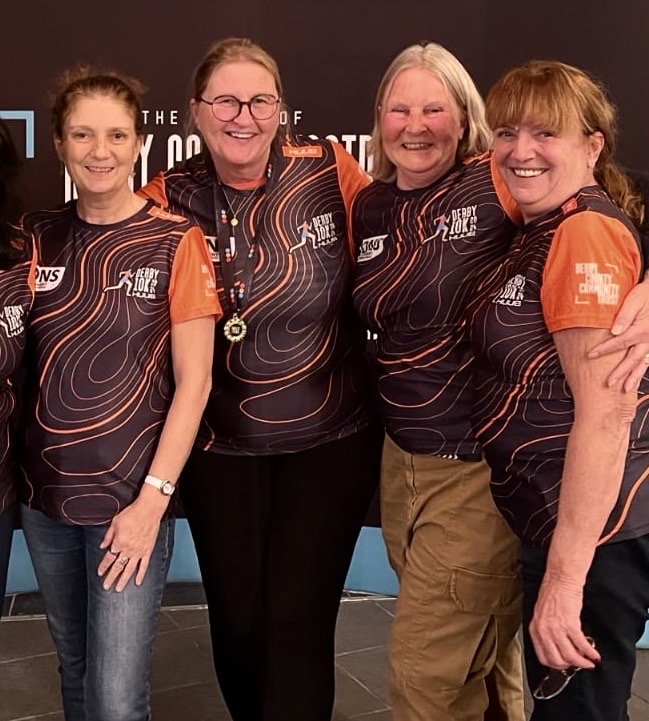
World Stroke Day is held annually on 29th October to increase awareness of stroke across the globe. To mark the day, we are sharing our participant Liz’s story.
The team at Derby County Community Trust first met Liz when she began attending the Active Recovery programme having overcome a breast cancer diagnosis.
Liz enjoyed the sessions and whilst working towards becoming more active she met likeminded people who soon became good friends of hers.
After some time, Liz began noticing a number of signs that lead to her being told she had suffered from a TIA. A transient ischemic attack, commonly known as a TIA or a mini-stroke is a temporary blockage of blood flow to the brain that causes stroke-like symptoms such as sudden weakness, numbness or trouble speaking.
“I attended the Active Recovery sessions regularly and an early warning sign [of TIA] was identified from one of the sessions. A member of the Community Trust team, held a workshop with blood pressure machines. I decided to check mine, which showed a high reading which stuck in my mind.
Sometime after that, I went on a dog walk and felt an odd sensation. I felt pain in my chest which then travelled quickly up to my head leaving me with a faint feeling. Following on from this, I went to my local pharmacist and asked to have my blood pressure checked.
The reading again, was very high, so I was asked to see a nurse who took an ECG and my blood pressure a few more times. I was then taken to see the GP, who told me I needed to begin antihypertensives medication along with an urgent blood test and another ECG before starting blood pressure tablets and statins with the aim to prevent having a stroke.”
After this, Liz began to feel as though the medication had helped, describing feeling “better” for a couple of months afterwards, being able to increase her activity including walking her dog and attending the Active Recovery aqua sessions.
However, this soon changed. “I woke up one day and I had visual issues. I thought maybe they were dry from being asleep, so I bathed my eyes. I wasn’t concerned at the time, until I was driving a while later and realised, I could see double of what was ahead of me. I decided to call at the pharmacy, I explained to them that my eyes were alarming me and I was quickly sent to A&E with my symptoms pointing to a suspected stroke.”
Liz explained she was in denial of what she was told at the pharmacy, being sure a trip to have her eyes tested would solve her visual problems.
At an eye test the following day, Liz said “I was told to go to A&E with a written letter and to not drive. I had a lot of tests to measure my movement along with looking at the sensations of my limbs. The following day, I was asked to have a CT scan and continuous tests. The consultant then revealed they thought I had suffered from a transient ischemic attack.”
Liz is now on blood thinners that she will have to take for the rest of her life and has at home blood pressure and ECG machines to monitor her stats regularly.
When we asked Liz how she handled the recovery process, she replied “I find I struggle a lot with my speech. I didn’t realise at the time, but when I am tired, I find it very difficult to speak how I usually would.”
She went on to describe how the team at Derby County Community Trust have supported her, saying “There is no pressure. The friends I made at the Active Recovery sessions came to visit me during my recovery. Health and Physical Activity Officer, Lee would call me to check on how I was doing, along with showing me exercises to do from home.”
You can find out more about Transient Ischemic Attacks here – https://www.stroke.org.uk/stroke/type/tia
Learn more about the symptoms of strokes here – https://www.stroke.org.uk/stroke/symptoms
Find out more about Active Recovery here – https://derbycountycommunitytrust.com/what-we-do/active-recovery/
Latest News
-
Female Talent Pathway: September 2026 Roundup 25 September 2026
-
Essential Matchday Information – Derby County Women Under-21s FA Women’s National League Reserve Cup 22 September 2026
-
World Alzheimer’s Day 2026: Relive Special Memories with Raminiscence 21 September 2026
-
Derby County Community Trust to host Macmillan Coffee Morning 17 September 2026
-
Derby 10k: 2027 entries now on sale! 15 September 2026
-
Derby County Community Trust Publishes 2025/26 Annual Report 8 September 2026